



MikroTik vs Ubiquiti: Which Networking Platform Is Best in 2026?
If you’re comparing MikroTik vs Ubiquiti, you’re likely evaluating two of the most popular networking platforms available today. Both vendors offer routers, switches, wireless solutions, and network management tools, but they are designed for different priorities.
Quick Answer:
- Choose MikroTik if you need advanced routing, BGP, OSPF, MPLS, VPNs, traffic shaping, WISP functionality, or carrier-grade networking.
- Choose Ubiquiti if your primary goal is simplified deployment and centralized Wi-Fi management.
- For organizations that require flexibility, scalability, and maximum value per dollar, MikroTik remains one of the strongest networking platforms available in 2026.
At NACE, a MikroTik Master Distributor, we work with businesses, WISPs, ISPs, integrators, and managed service providers that depend on reliable, scalable network infrastructure. This guide compares MikroTik and Ubiquiti across routing, wireless networking, management, cost, and real-world deployments.
MikroTik vs Ubiquiti Comparison Overview
| Feature | MikroTik | Ubiquiti |
|---|---|---|
| Best For | ISPs, WISPs, MSPs, Advanced Networks | Best For ISPs, WISPs, MSPs, Advanced Networks SMBs, Multi-Site Businesses |
| Routing Features | Excellent | Good |
| BGP Support | Full | Limited |
| OSPF Support | Full | Limited |
| MPLS Support | Yes | No |
| VPN Features | Excellent | Good |
| Wireless Management | Good | Excellent |
| Centralized Management | Limited / Third-Party Options | Excellent |
| Customization | Extensive | Moderate |
| Learning Curve | Higher | Lower |
| Hardware Cost | Lower | Lower |
| Licensing Fees | None | Minimal |
| Overall Value | Excellent | Very Good |
Why Network Professionals Choose MikroTik
While many comparison articles focus on features, network engineers care about outcomes.
MikroTik delivers:
- Full BGP support for multi-homed Internet connectivity
- OSPF for large multi-site deployments
- WireGuard VPN support
- MPLS and carrier-grade routing capabilities
- Advanced QoS and traffic engineering
- Powerful firewall policies
- Extensive scripting and automation
- No recurring licensing fees
- Exceptional performance-per-dollar

For organizations that manage multiple locations, service-provider infrastructure, or large surveillance deployments, these capabilities can dramatically reduce long-term operational costs.
MikroTik vs Ubiquiti Routers

MikroTik Router Advantages
- Advanced routing capabilities
- Full BGP and OSPF support
- Advanced traffic shaping
- Detailed firewall policies
- Automation and scripting
Best for: ISPs, WISPs, MSPs, and advanced networks
Ubiquiti Router Advantages
- Simplified deployment
- Centralized management
- Easier VPN configuration
- Unified administration
- Lower administrative complexity
Best for: SMBs and multi-site businesses
Router Verdict
Winner for advanced networking: MikroTik
Winner for ease of administration: Ubiquiti
MikroTik vs Ubiquiti Wireless Networking
Wireless networking is one of Ubiquiti’s strongest areas.

Ubiquiti Wireless Strengths
- UniFi Controller ecosystem
- Simplified deployment
- Centralized management
- Guest portal functionality
- Seamless roaming
MikroTik Wireless Strengths
- CAPsMAN centralized management
- Extensive customization
- Strong RouterOS integration
- Competitive hardware pricing
- Advanced configuration options
Wireless Strength Verdict
Ubiquiti currently offers a more mature Wi-Fi management ecosystem, while MikroTik provides greater flexibility and tighter integration with RouterOS-based networks.
Many organizations successfully combine MikroTik routing with UniFi wireless infrastructure.
MikroTik vs Ubiquiti for WISP Deployments
Wireless Internet Service Providers have different networking requirements than traditional businesses. They need scalable routing, subscriber management, traffic control, and reliable wireless distribution.

MikroTik WISP Advantages
- Subscriber management
- Advanced QoS
- Traffic shaping
- BGP routing
- Customer segmentation
- Network automation
- Carrier-grade routing capabilities
Best for: Routing, subscriber management, traffic control, and network automation
Ubiquiti WISP Advantages
- Point-to-point wireless links
- Wireless backhaul
- Subscriber radios
- airMAX infrastructure
- Simplified wireless deployment
- Wireless distribution
Best for: Wireless connectivity, backhaul, and subscriber distribution
WISP Strength Verdict
MikroTik is generally the stronger choice for routing, subscriber management, and traffic control, while Ubiquiti remains a popular option for wireless backhaul and subscriber distribution.
Common WISP Architecture
Many WISPs successfully use both platforms:
- MikroTik: Routing, subscriber management, and traffic control
- Ubiquiti: Wireless backhaul and subscriber distribution
This combined approach gives WISPs advanced network control while maintaining reliable wireless connectivity.
MikroTik vs. Ubiquiti for ISP Networks
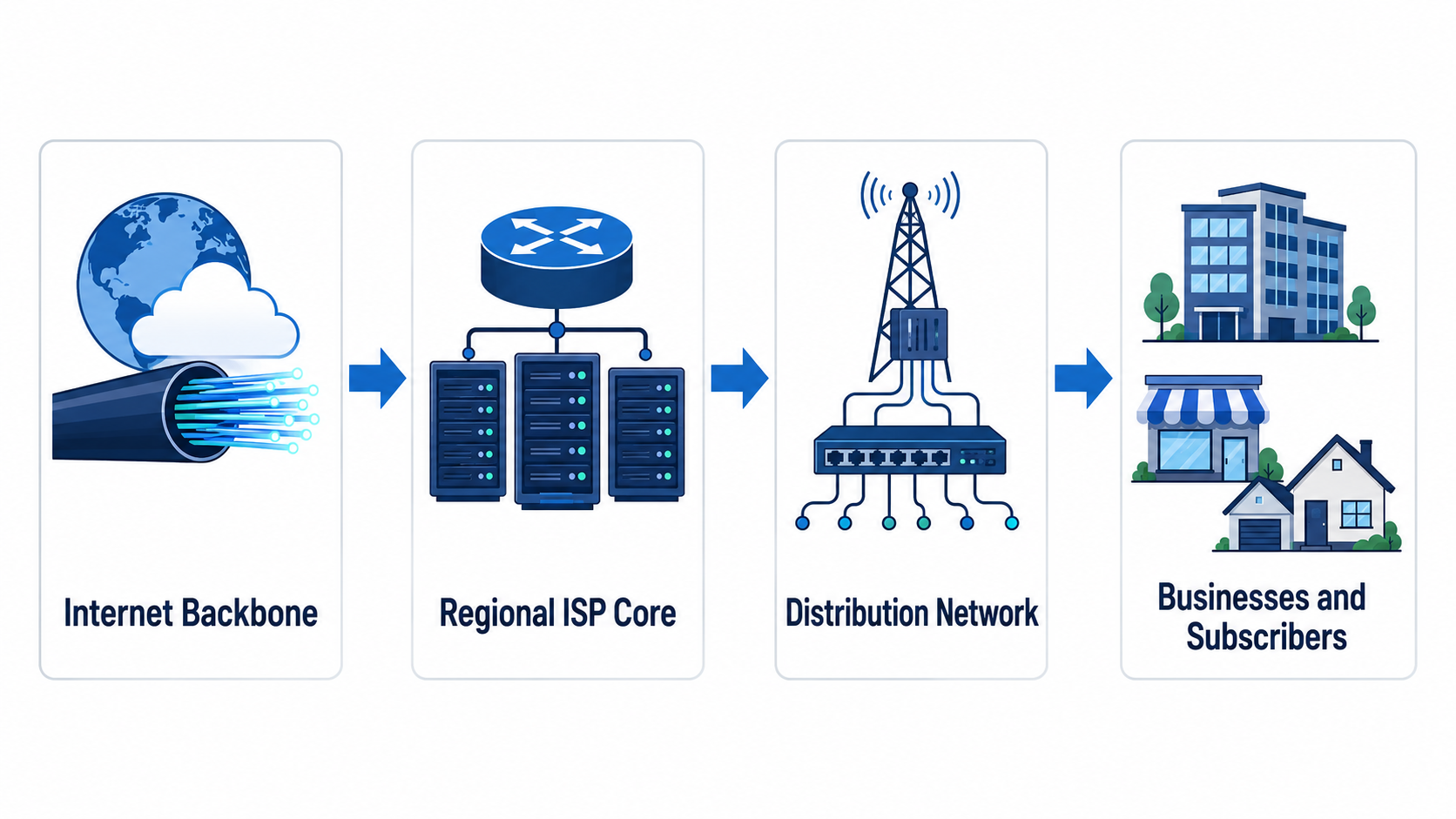
For regional ISPs and carrier networks, advanced routing capabilities become critical. These networks require a platform that can support complex routing, traffic engineering, automation, and continued growth.
MikroTik ISP Advantages
- Full BGP support
- MPLS support
- OSPF support
- Carrier-grade routing
- Traffic engineering
- Network automation
- Lower infrastructure costs
Best for: Regional ISPs, carrier networks, and service-provider environments
ISP Verdict
MikroTik is generally the stronger choice for regional ISPs and carrier networks that require advanced routing, traffic engineering, automation, and lower infrastructure costs.
Best Choice for Managed Service Providers
Managed Service Providers have different priorities depending on their customers, technical resources, and network requirements.

Choose MikroTik If You Need
- Advanced routing
- Custom network design
- Multi-site VPN architectures
- Traffic engineering
- Service-provider capabilities
Best for: MSPs that design and manage advanced or highly customized networks
Choose Ubiquiti If You Need
- Simpler network management
- Faster customer onboarding
- Centralized administration
- Lower training requirements
Best for: MSPs prioritizing streamlined deployment and simplified administration
MSP Verdict
MikroTik provides greater flexibility for advanced and customized network designs, while Ubiquiti can simplify deployment, onboarding, and daily administration.
Total Cost of Ownership
Hardware cost is only one part of the total investment. Depending on the networking platform, organizations may also need to account for:
- Cloud subscriptions
- Security licenses
- Routing licenses
- Controller licenses
MikroTik Cost Advantage
No Recurring RouterOS Subscription Fees
MikroTik includes most advanced functionality within RouterOS without recurring subscription fees.
Over a five-year deployment, these savings can amount to thousands of dollars per site. For budget-conscious businesses, WISPs, ISPs, and MSPs, this can significantly improve the total cost of ownership.
Cost Verdict
MikroTik’s combination of affordable hardware, advanced functionality, and no recurring RouterOS subscription fees can deliver excellent long-term value.
MikroTik vs. Ubiquiti Security Comparison
Both vendors provide strong security capabilities when properly configured. The primary difference is the level of customization and administrative complexity.
MikroTik Security Features
- Advanced firewall policies
- Multiple VPN technologies
- Network segmentation
- Detailed access controls
- Advanced traffic filtering
Best for: Organizations requiring detailed security control and customized network policies
Ubiquiti Security Features
- Simplified policy deployment
- Centralized management
- Unified network visibility
- Easier daily administration
Best for: Organizations prioritizing streamlined security management and centralized visibility
SecurityVerdict
Both platforms can provide strong security when properly configured. MikroTik offers more detailed control and customization, while Ubiquiti provides a simpler administrative experience.
Why Buy MikroTik Through NACE?
As a MikroTik Master Distributor, NACE provides more than hardware. Our team helps customers select, design, configure, and deploy networking solutions that meet their specific requirements.

MikroTik product expertise

Network design assistance

Inventory Availability

Pre-sales engineering support

Training resources

Technical guidance

Solutions for businesses, WISPs, ISPs, and MSPs
Whether you’re designing a new network or upgrading existing infrastructure, our team can help identify the right MikroTik solution for your requirements.
Final Verdict: MikroTik or Ubiquiti?
For businesses that prioritize centralized Wi-Fi management and simplicity, Ubiquiti remains a strong option.
However, MikroTik is often the stronger long-term investment for organizations that require:
✓ Advanced routing
✓ Full BGP support
✓ OSPF
✓ MPLS
✓ Traffic shaping
✓ VPN flexibility
✓ Network automation
✓ Maximum value per dollar
If you’re evaluating MikroTik solutions, contact NACE to discuss your project and identify the best platform for your deployment.
Frequently Asked Questions
Is MikroTik better than Ubiquiti?
It depends on the application. MikroTik is generally stronger for advanced routing, ISP deployments, WISP networks, and highly customized environments.
Is MikroTik cheaper than Ubiquiti?
In most cases, MikroTik provides lower hardware costs and more advanced features per dollar spent.
Is MikroTik good for WISPs?
Yes. MikroTik is one of the most widely deployed routing platforms among WISPs because of its traffic management, routing, and automation capabilities.
Is MikroTik good for ISP networks?
Yes. MikroTik supports BGP, MPLS, OSPF, traffic engineering, and carrier-grade routing features commonly used by regional ISPs.
Can MikroTik and Ubiquiti be used together?
Absolutely. Many organizations use MikroTik for routing and traffic management while deploying Ubiquiti access points and wireless infrastructure.